Where is the cutting point?
An overhead canopy conceals stem attachments. A working view finds the block again, then places the scissors in relation to it. Pages 3–4.
Field Notes / Beneath the cap
Beneath the cap, a different story: the architecture of spores, the shape of maitake and the moment a harvest is ready.
Under the canopy · One mushroom, many fans · Harvest by maturity, not size · A harvest-to-cooler reference to keep
A photographic edition from the Southwest Mushrooms archive.
Open the notebook / Three questions
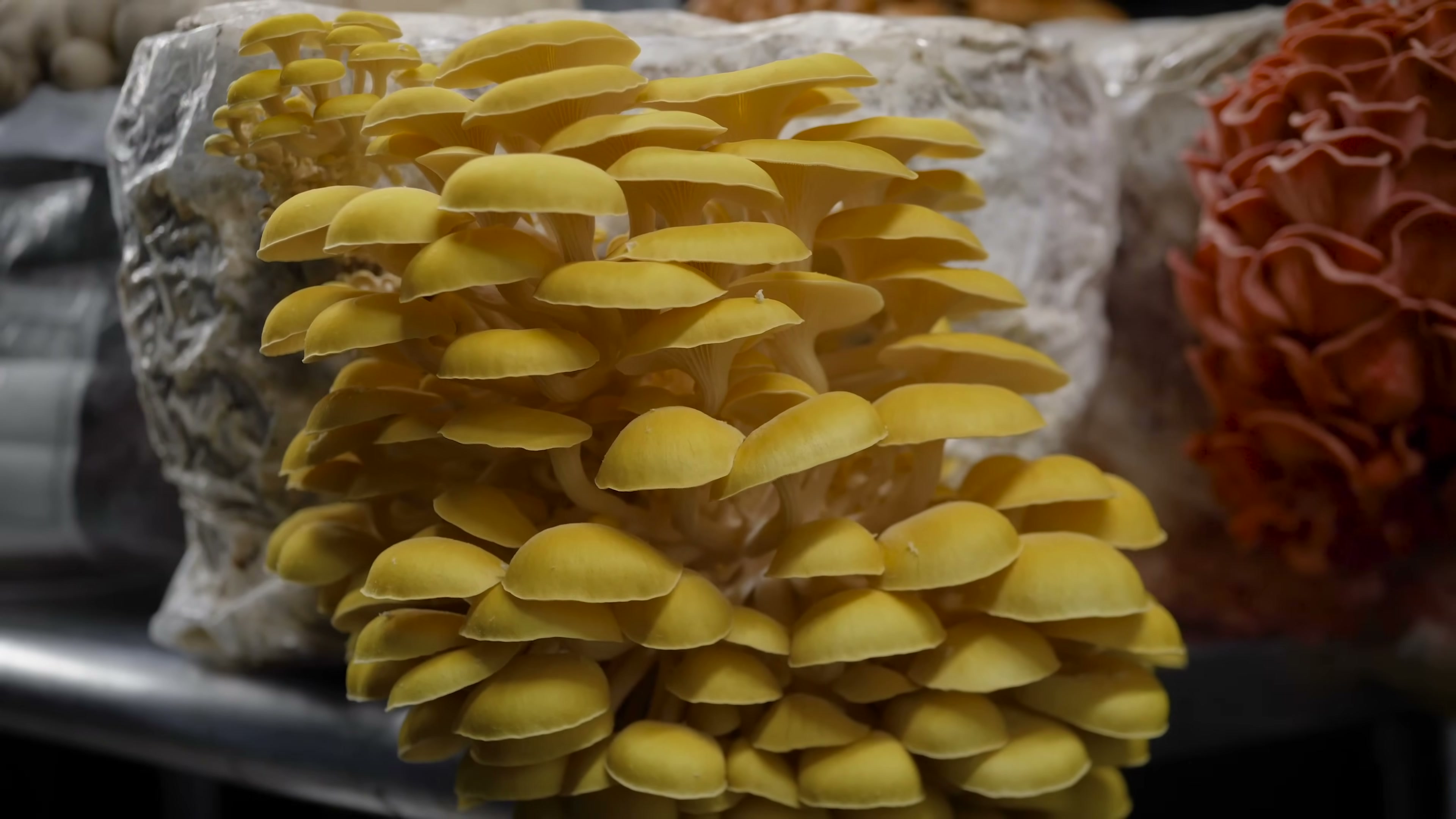
Yellow overlaps, pink folds, a hand beneath a crowded canopy. The room is beautiful at first glance. The second glance asks what all that shape is doing.
A mushroom is a reproductive structure, the visible part of a fungus whose mycelium grows through its substrate and releases enzymes to obtain nutrition. That distinction changes the picture: the cap is not the whole organism. It is one of the places where the organism’s reproductive work becomes visible.
Biology / Cornell: Mycology 101
https://smallfarms.cornell.edu/resources/mycology-101/
An overhead canopy conceals stem attachments. A working view finds the block again, then places the scissors in relation to it. Pages 3–4.
Gill gaps give spores an exit route. Maitake takes a different structural path: many fans, a branching base and pores. Pages 4–6.
A broad cap is not automatically a better harvest. Species-specific edges and teeth offer more useful cues than size alone. Pages 8–9.
Along the way: four photographic plates, a repeatable way to document a block, and two pages to take from the reading table to the harvest bench.
The working room / Photo essay
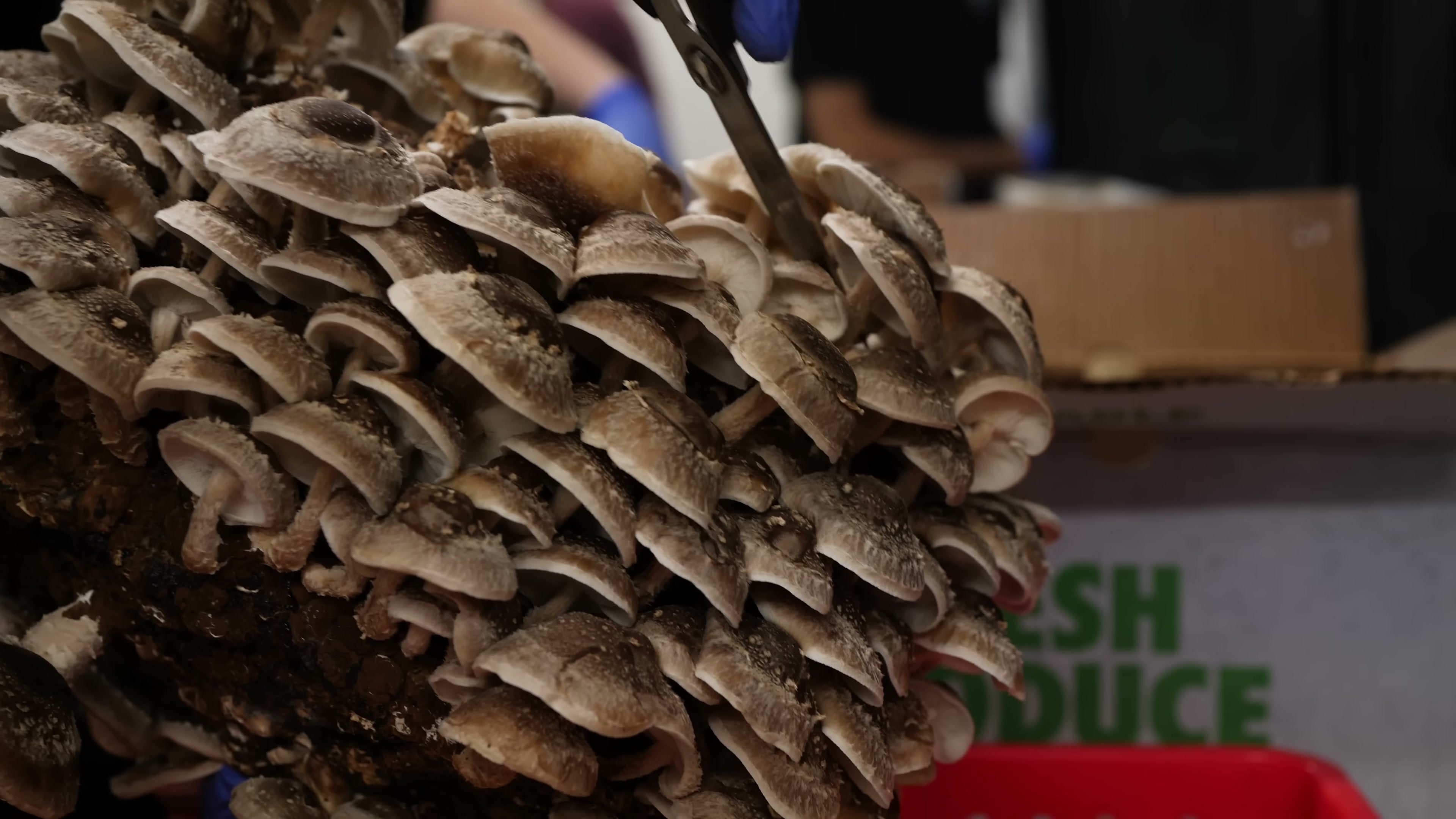
An abundant block can hide the very place a harvest has to begin.
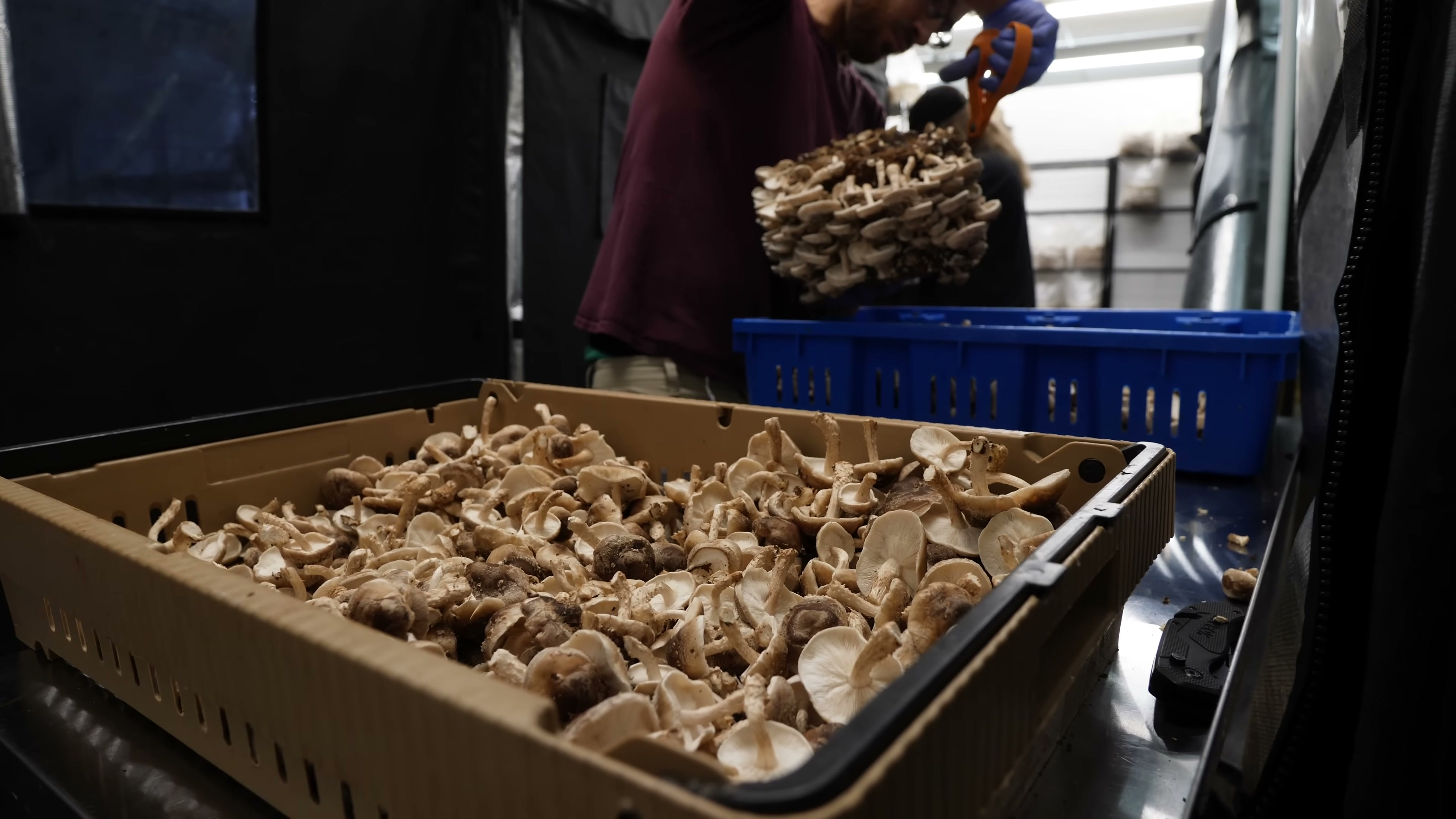
Brown discs overlap until the block nearly disappears. You can follow the cap rims, but many stem attachments sit behind them. The attractive view and the working view ask different things of the camera.
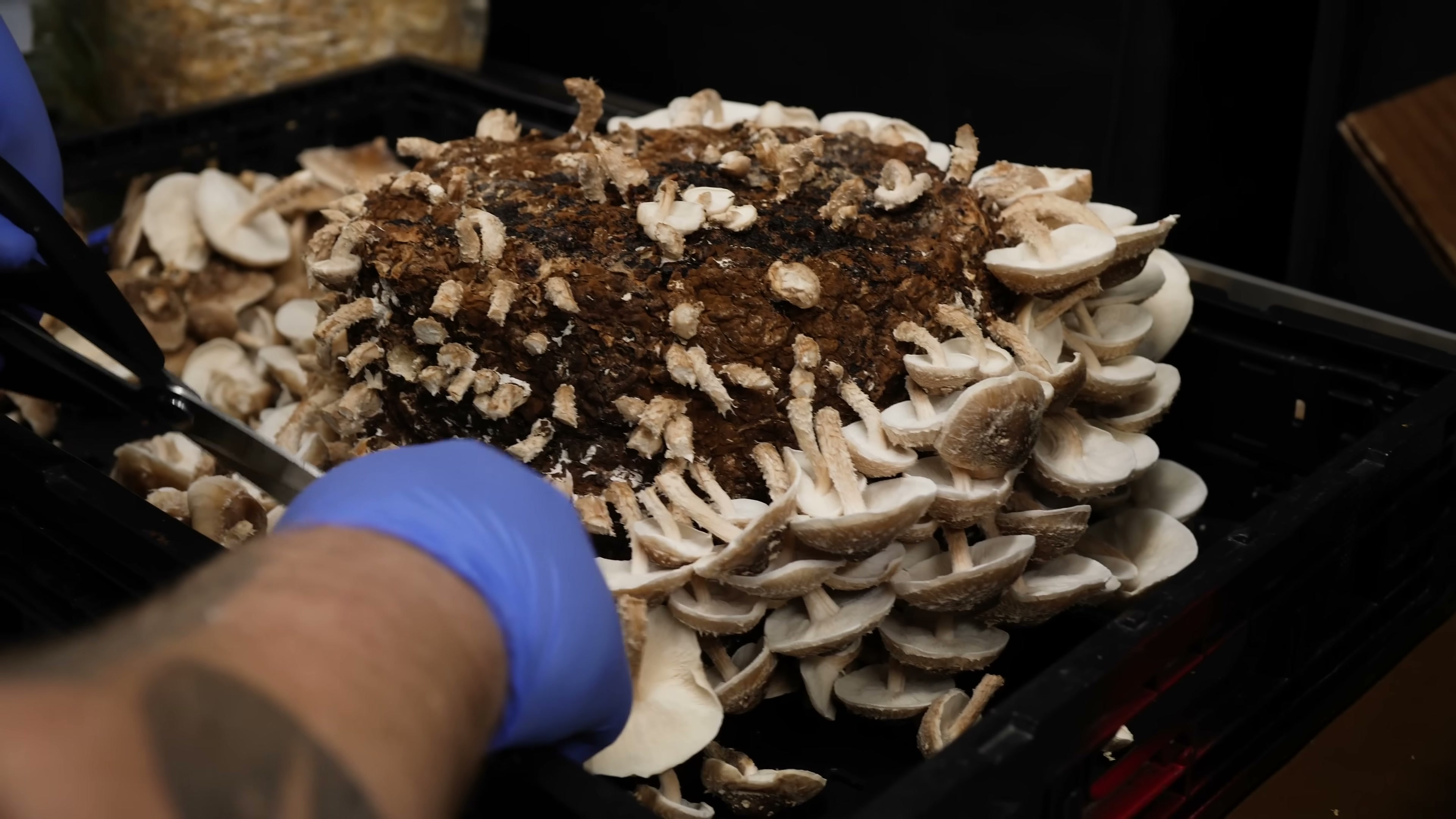
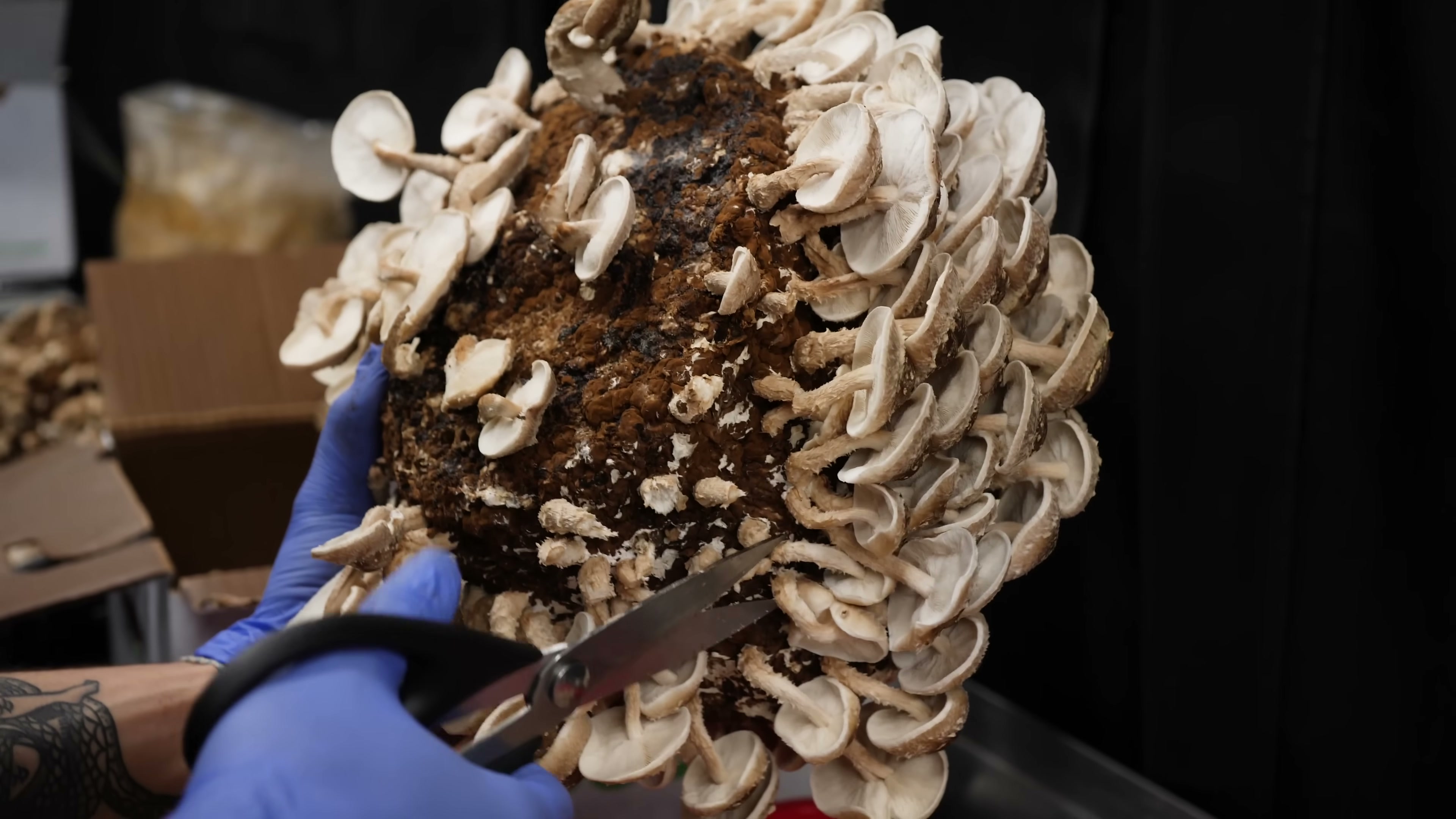
Turn to the scissors photograph on the next page. The brown substrate surface now occupies the center; exposed stems interrupt it, while pale cap undersides gather at the perimeter. The tool is beside those stems, not above the canopy. That relationship is the discovery: the harvest task becomes legible when the hidden attachment points enter the frame.
The tray view supplies the other end of the task. Harvest is not only the moment a mushroom leaves its block; there is also somewhere for it to land. A close-up of the scissors cannot show that receiving arrangement. The wider photograph can.
Handling / Cornell: Post-Harvest Handling
https://smallfarms.cornell.edu/resources/harvest-to-market-guide/post-harvesting-handling/
The working room / Tool, underside, tray
Spore dispersal / Heino Lepp, Australian National Botanic Gardens
https://www.anbg.gov.au/fungi/dispersal.html
The specimen pages / Surface and structure
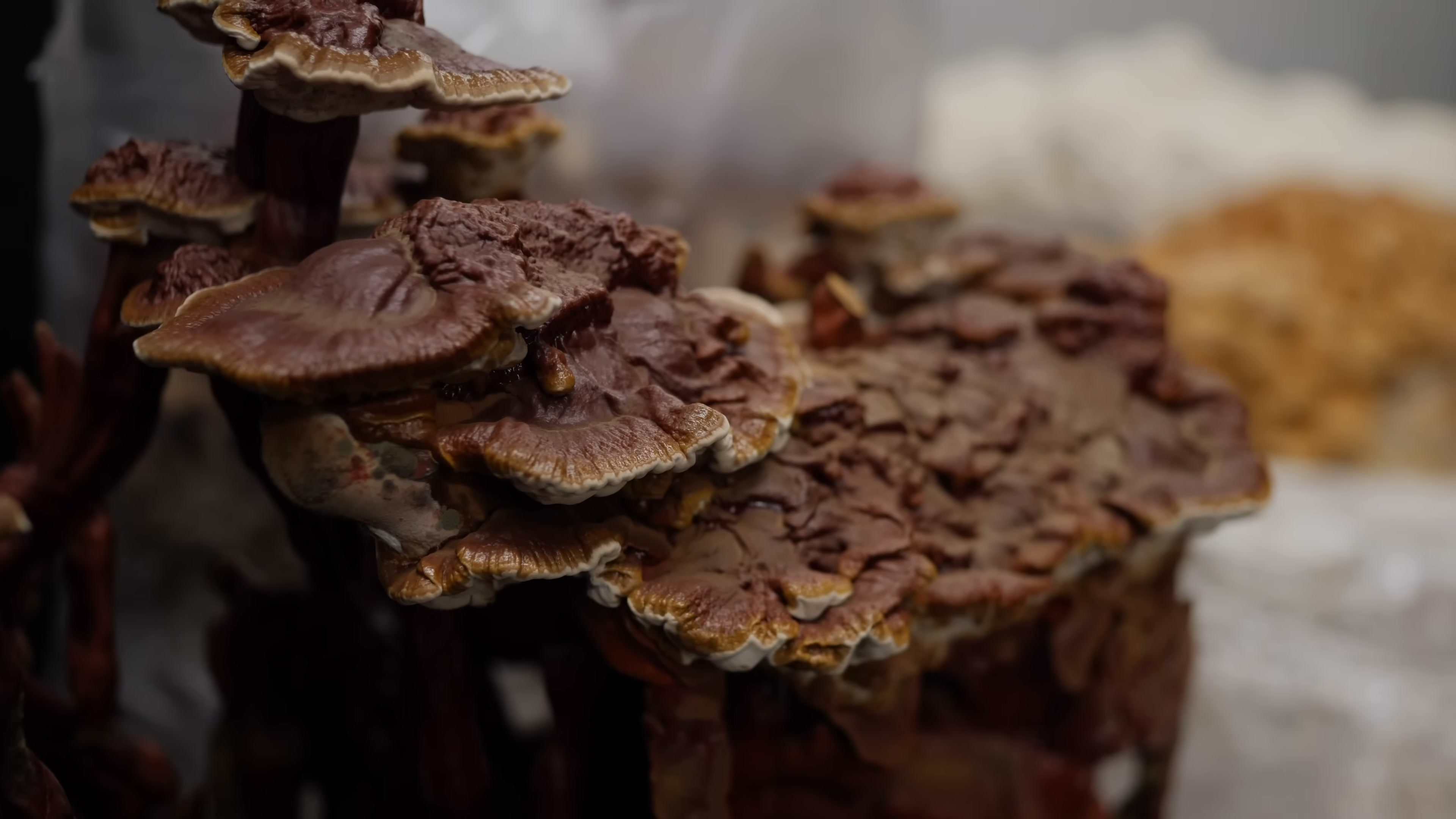
A cap’s upper surface and its spore-bearing underside tell different stories. These four views do not reveal them equally.
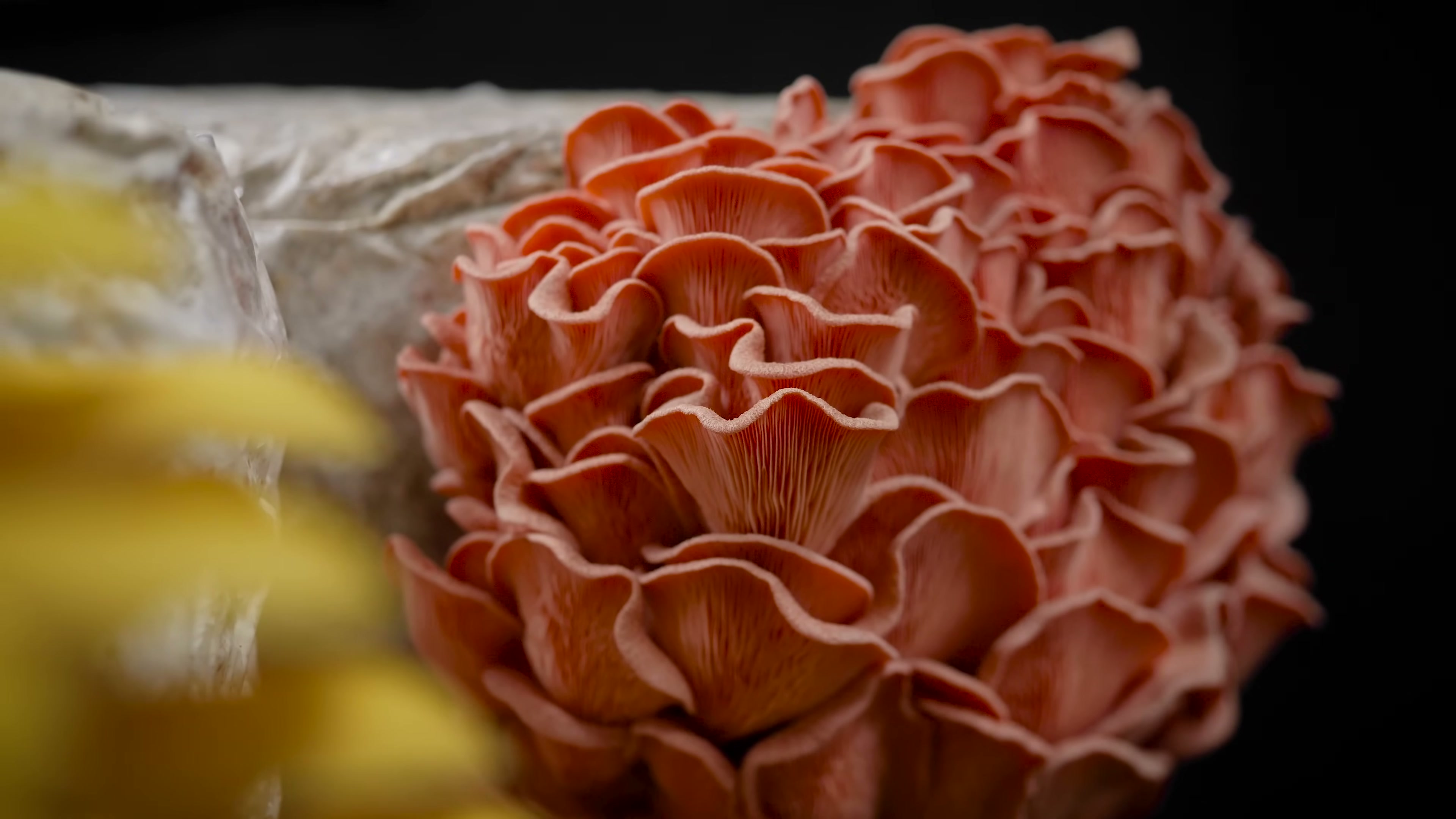
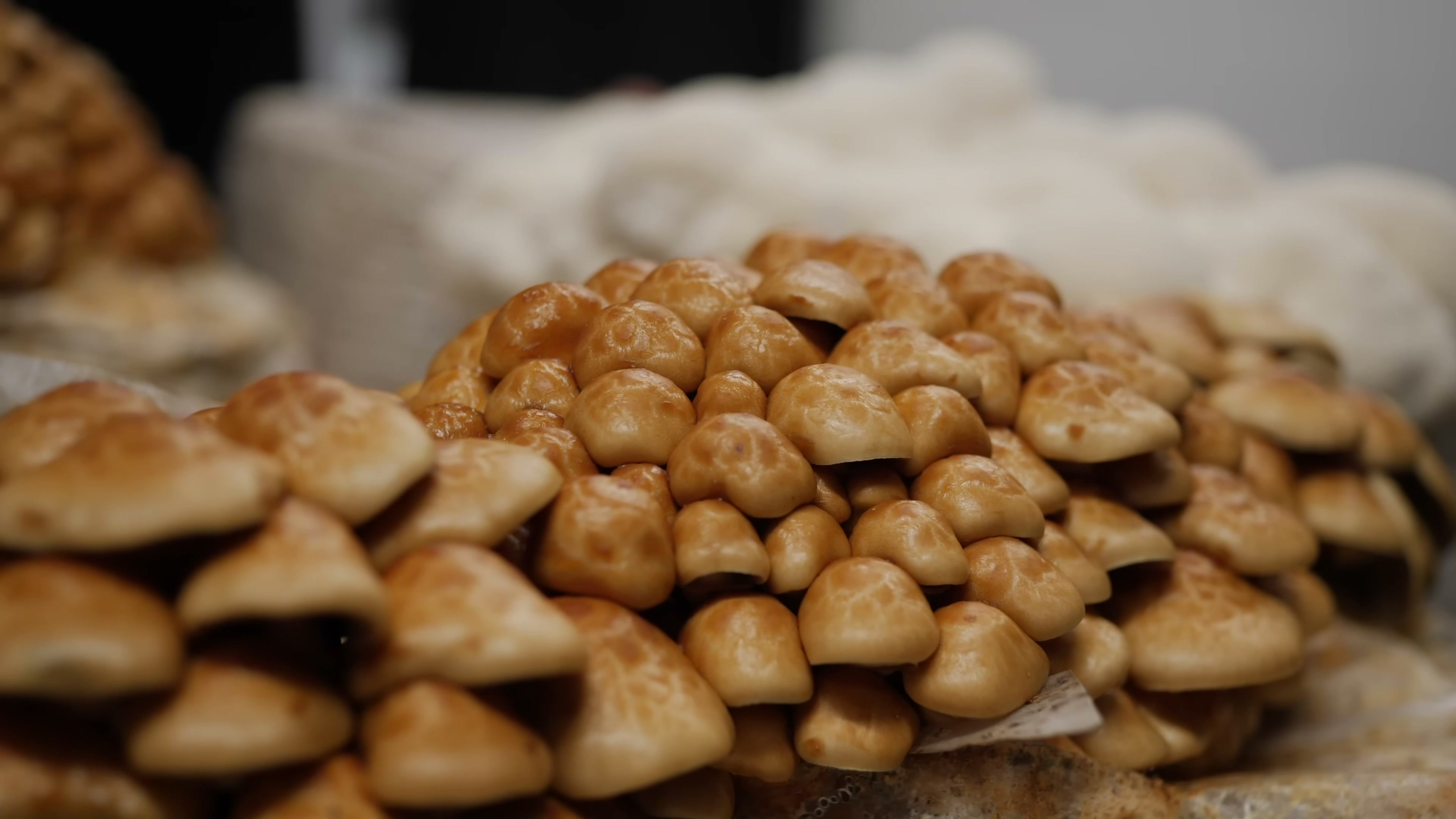
The pink plate lets the eye follow gill lines. The rounded brown plate offers mottling instead: texture on the cap above, rather than a view underneath. That is a useful distinction when photographing a mushroom. A striking surface detail may be beautiful without answering the structural question you brought to it.
Gill function / ANBG: Spore dispersal; pore-bearing maitake continues on the next page
https://www.anbg.gov.au/fungi/dispersal.html
The specimen pages / Grifola frondosa
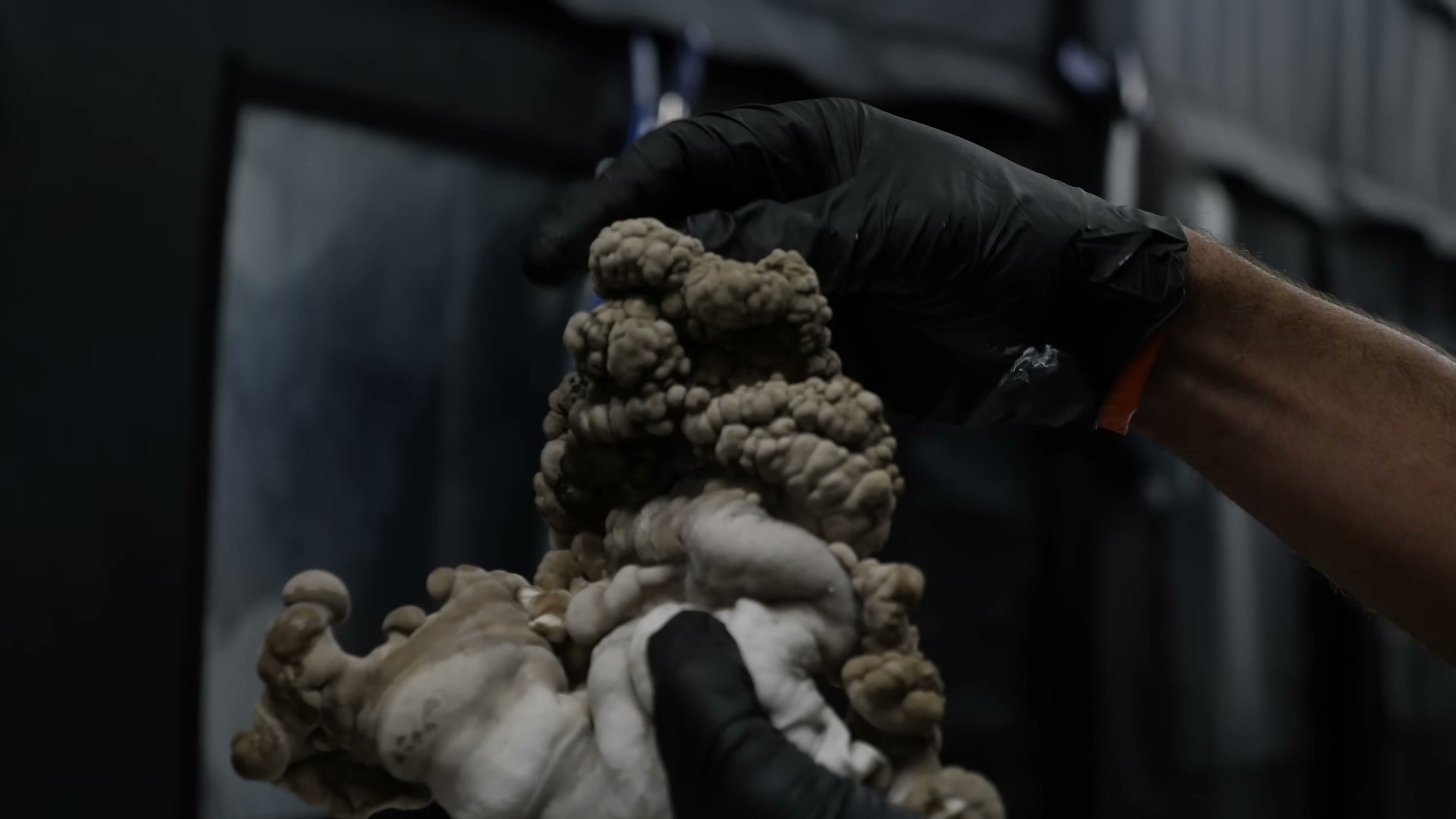
The familiar cap-on-a-stalk picture is a poor universal model. Mature maitake is a branching arrangement of many caps.
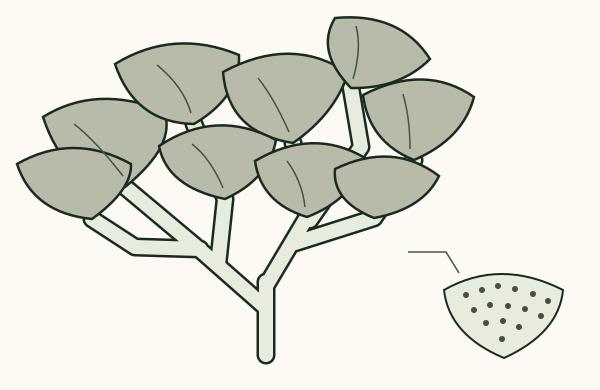
1 / Many fan-shaped or triangular caps form a rosette.
2 / Caps connect through a common branching whitish stalk base.
3 / Cap undersides bear pores, rather than gills.
Michael Kuo’s description of mature Grifola frondosa supplies the model above. Follow the branches toward the base and the many fans become parts of one fruiting body. Turn a fan over and the contrast with our gilled harvest photographs is sharper still: maitake has pores.
The archive’s held, lobed formation is not being identified as a normal developmental stage or promised to become the sketch. The comparison expands the mental model; it does not diagnose the photograph.
Mature morphology / Michael Kuo: Grifola frondosa, October 2017
https://www.mushroomexpert.com/grifola_frondosa.html
At the bench / A technique to borrow
A useful photograph carries its context with it. Keep the whole block, then the detail, then the question.
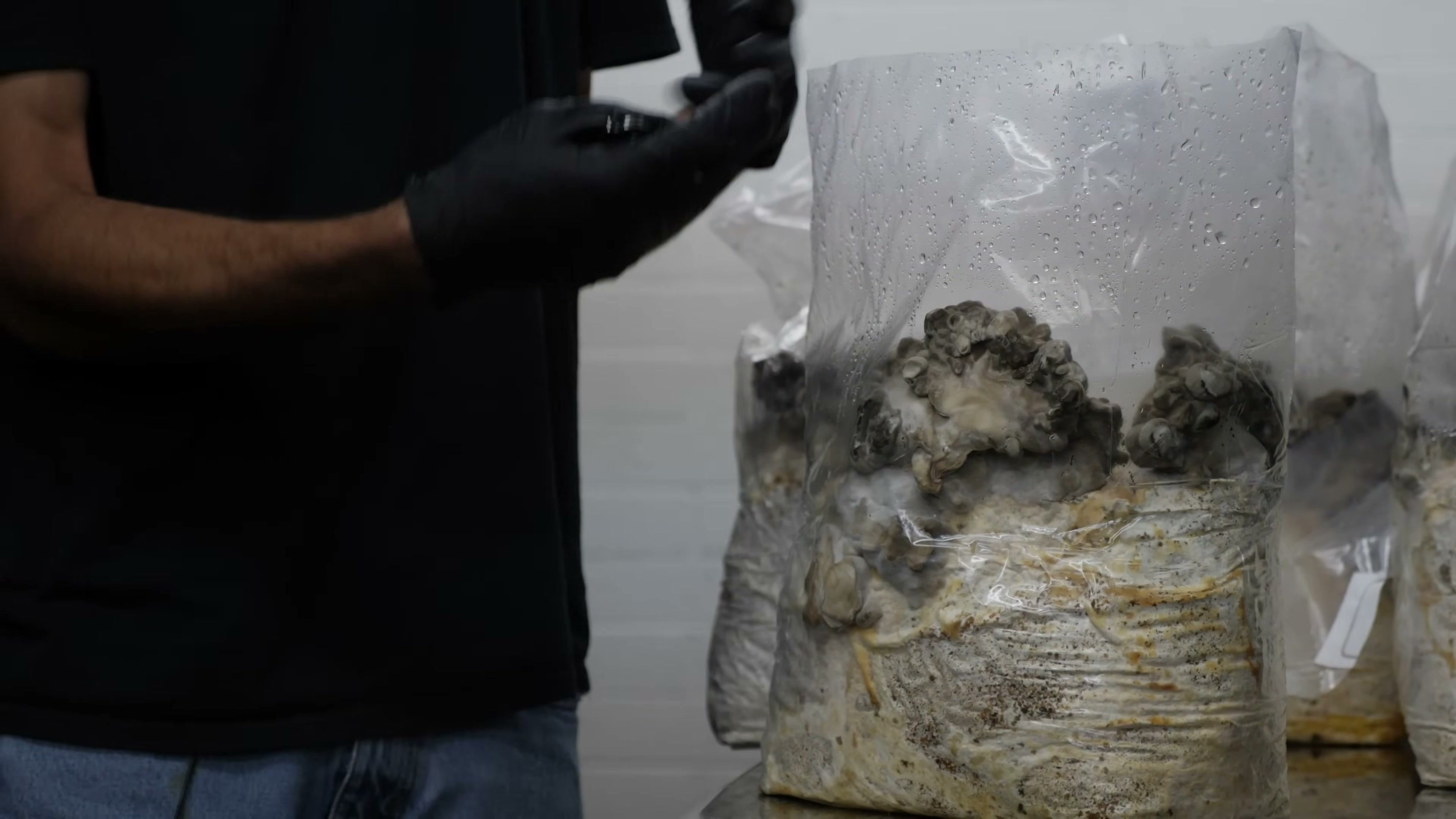
Begin with the whole subject and surroundings. Add a detail view of the feature you want to compare. Keep both original files under one record identifier.
Note the capture time, viewpoint and lighting. Repeat the angle for comparison, or state the change. Camera brightness is not a room measurement.
Write the visible feature and its location first. Add the context you know. Put your interpretation or next question in its own sentence.
Keep edits as copies. Label cropping or brightness changes. A future reader should be able to recover the wider scene, not only the selected detail.
Keep / Harvest-to-cooler reference / 1 of 2
Look for a species-specific change of shape, not simply the largest mushroom on the block.
Most of the cap is open, with the edge still rounded or curled and the gills visible.
A flat, pancake-like cap is late in Cornell’s guide. Maturity affects keeping quality, so extra size can come at the expense of a useful harvest window.
The cap retains a slight curl and the flesh remains flexible.
Cornell describes flatter clusters as more fragile. Read the cap edge and handling texture together rather than waiting for the widest possible spread.
Teeth point downward and are about 1 cm long.
This is Cornell’s approximate harvest cue, not a universal threshold. It is a different kind of signal from an opening cap: here you watch the teeth.
Harvest maturity / Cornell: Post-Harvest Handling
https://smallfarms.cornell.edu/resources/harvest-to-market-guide/post-harvesting-handling/
Next: ready the vessel, detach gently, remove debris, then cool and protect the harvest. No archive plate is being presented as a calibrated example of these maturity cues.
Keep / Harvest-to-cooler reference / 2 of 2
Plan the receiving vessel and the cold destination before the first mushroom leaves the block.
Use a food-safe harvest vessel that has been washed and thoroughly dried. Have the receiving space ready so the harvest has a prepared destination.
Cut or snip near the stem base, or use pulling and twisting where appropriate. Choose the method for the mushroom and situation; avoid treating one movement as a rule for every crop.
Brush off debris rather than washing the harvest. Use a damp cloth to dab remaining dirt if needed. These are handling steps for sound mushrooms, not a way to rescue spoiled product.
Cornell recommends 36–38°F (approximately 2–3°C). Arrange that cold space as part of the harvest, not as a problem to solve when the receiving vessel is full.
Choose food-safe protective packaging that allows air exchange. Paper bags suit small quantities. Breathable or unsealed packaging matters more than a blanket rule against one material.
Confirm that the buyer has cold storage. Your cooler is one part of the route; the receiving end needs to be ready too. These steps do not promise a fixed storage life.
Handling and refrigeration / Cornell: Post-Harvest Handling
https://smallfarms.cornell.edu/resources/harvest-to-market-guide/post-harvesting-handling/
The back page / Films and further reading
An edge can hide a stem, open a route for spores or signal a harvest window. Looking closely is most useful when it changes what you do next.
Published 2021-09-22
Published 2020-10-06
Published 2020-09-17
Accessed 2026-09-22
Accessed 2026-09-22
Published October 2017
Accessed 2026-09-22
https://smallfarms.cornell.edu/resources/harvest-to-market-guide/post-harvesting-handling/
Photographs: full-frame derivatives from the original-resolution masters. Source IDs, frame-selection times and hashes are in the accompanying source notes. Writing: new visual analysis, editorial method and credited paraphrases; no transcript quotations. Diagram: original explanatory drawing based on Kuo, not an archive image.
The reading table
Home and office editions, with a separate two-page harvest-to-cooler reference.