Field Notes 002From the Southwest Mushrooms archive
Field Notes.
Issue002From the Southwest Mushrooms archive
Before the First Transfer
The label is the beginning of the record, not the end of it.
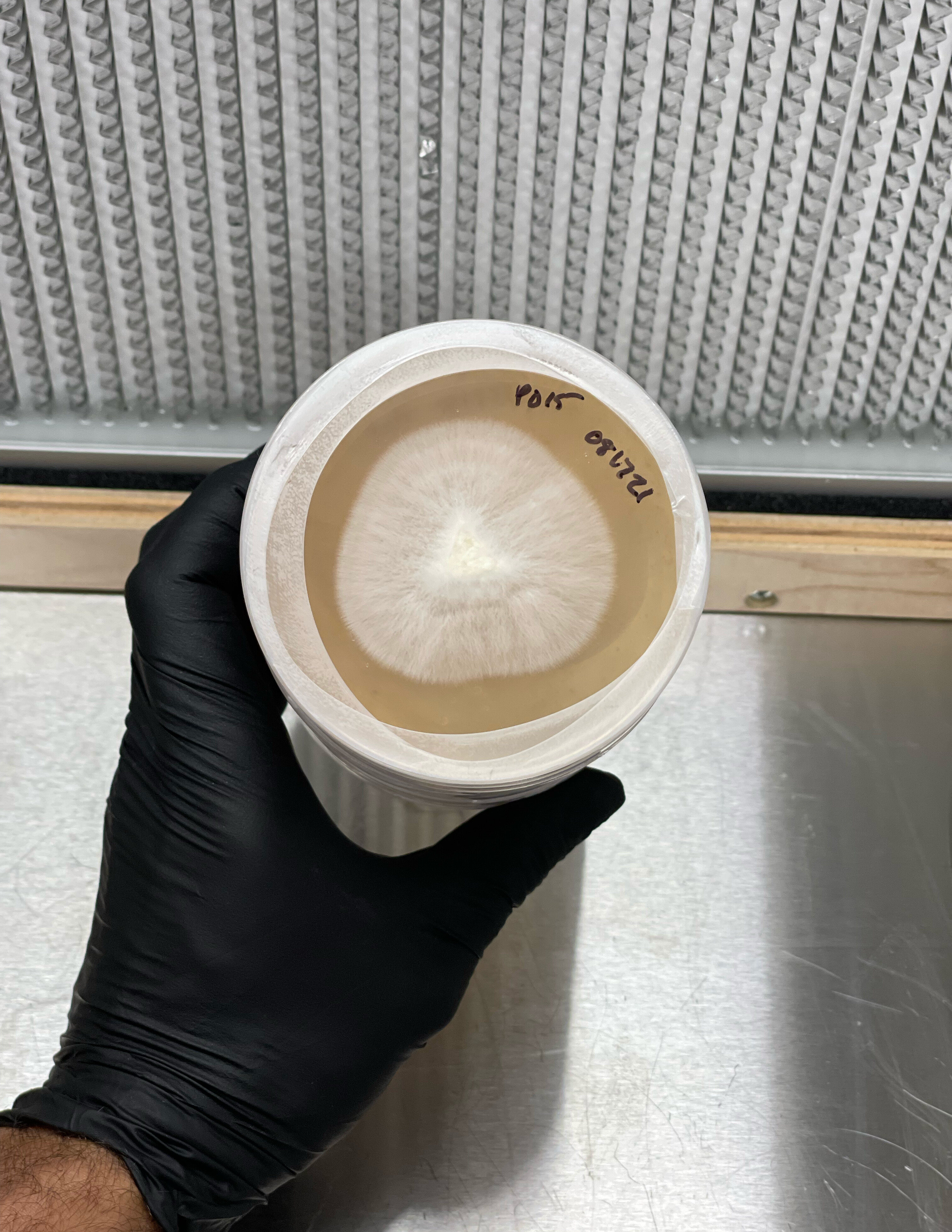
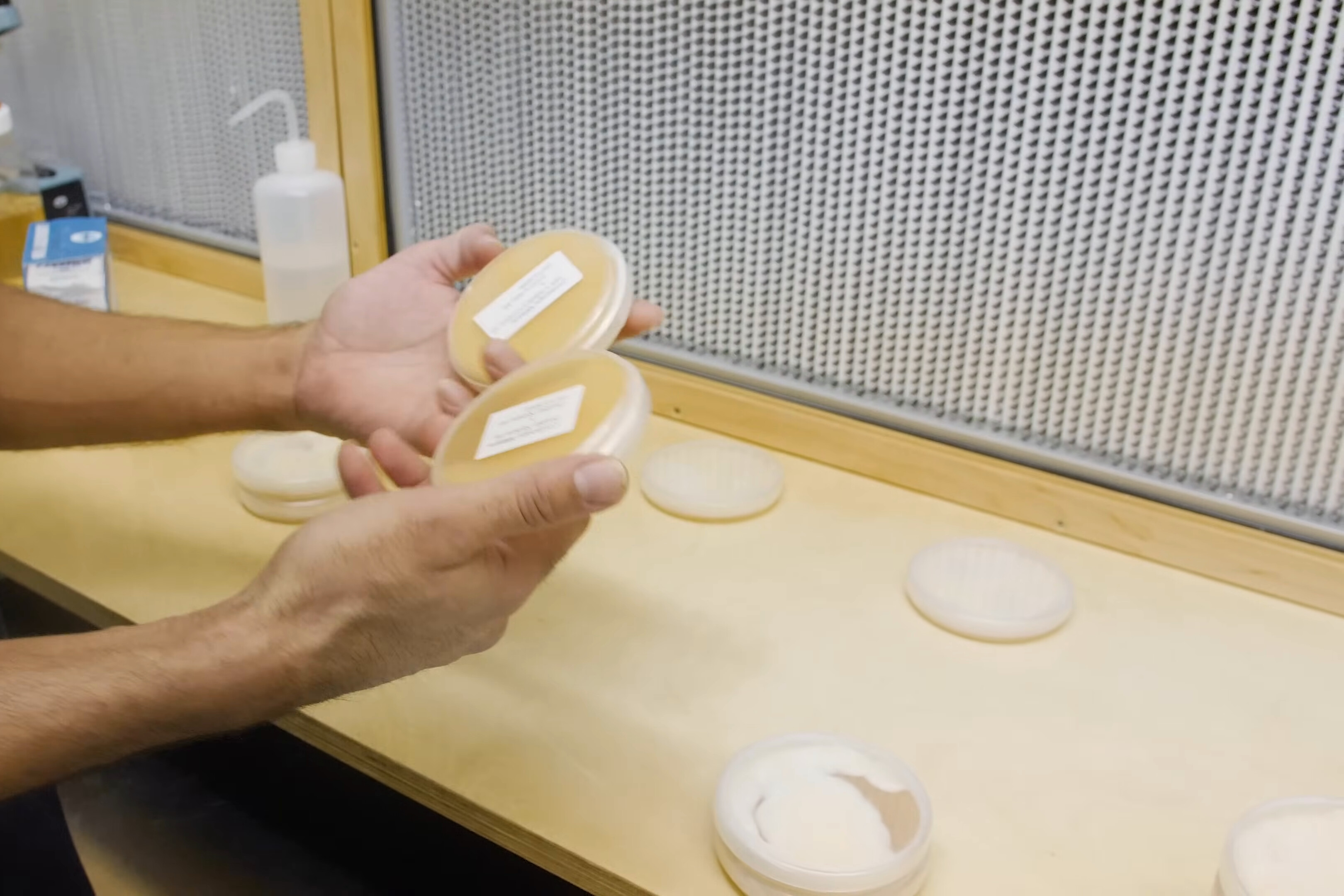
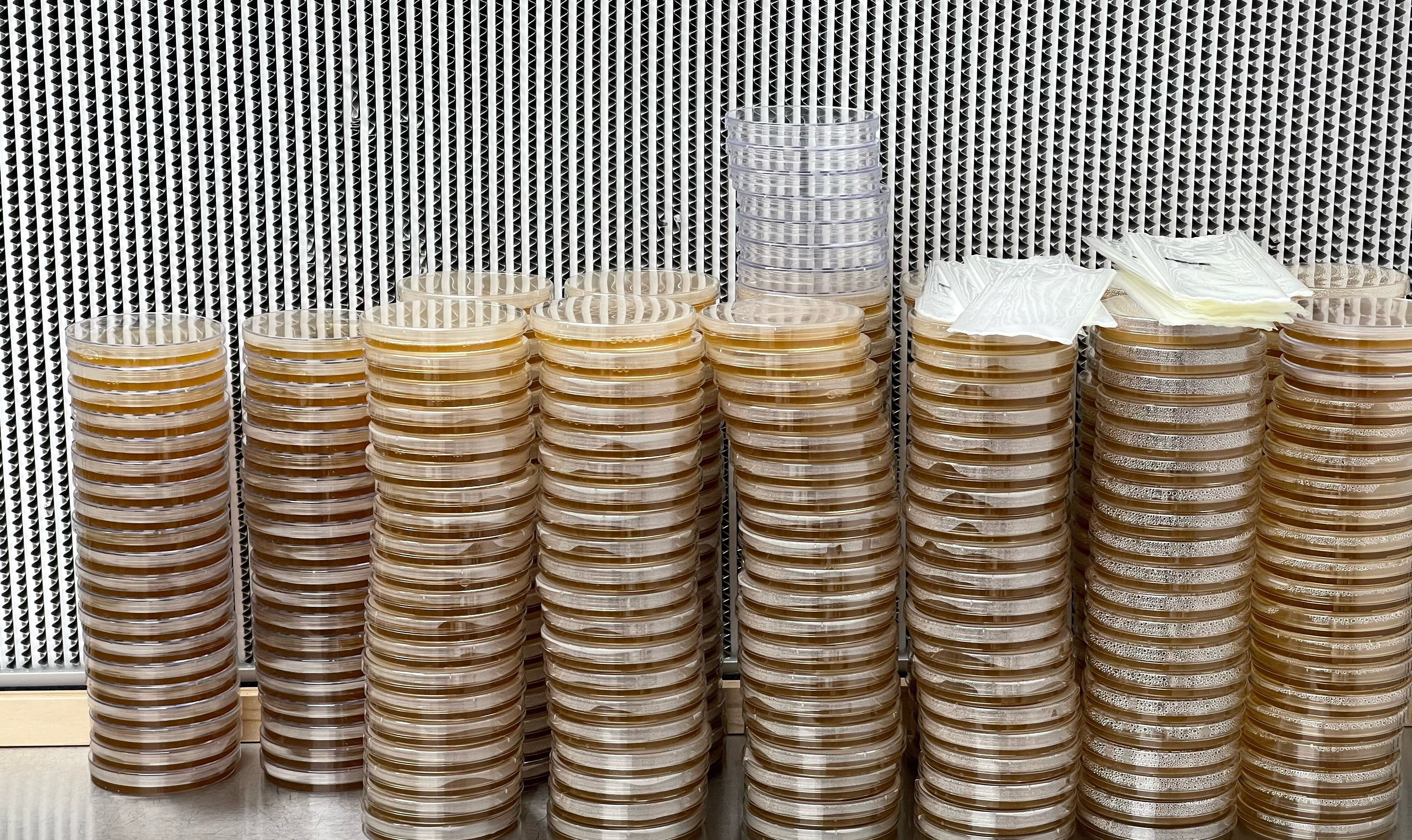
On the cover.A gloved hand holds a stack of culture plates in front of a laboratory filter at Southwest Mushrooms, photographed 21 August 2021. The handwritten label is shown as photographed and is not interpreted here.1 / 12
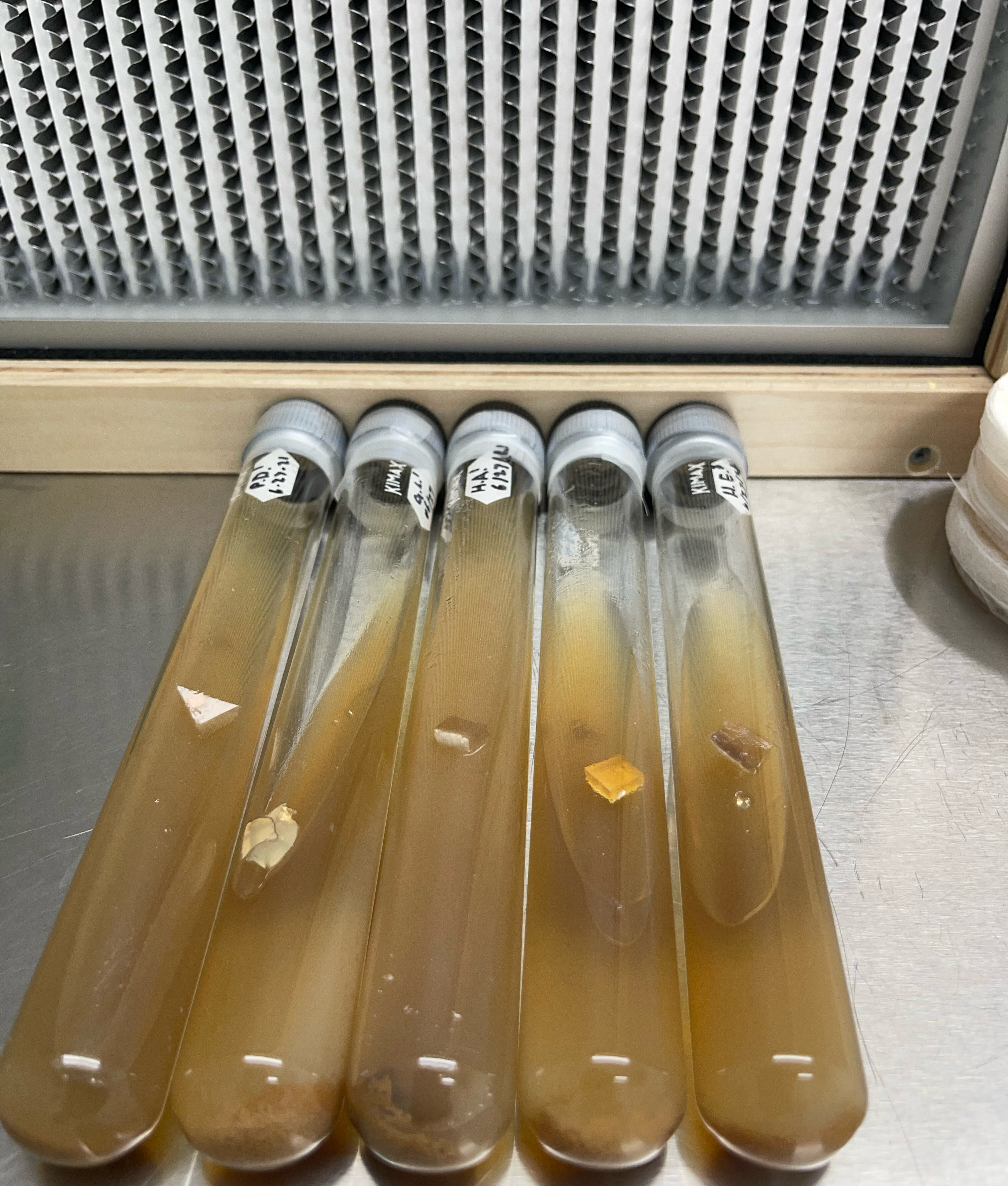
Culture tubes in front of a laboratory filter at Southwest Mushrooms, 27 June 2021.
Field Notes · Issue 002 · The culture collection
Before the First Transfer
The culture, the records, and the decisions behind a mushroom crop
Field Notes 002 · Before the First Transfer2 / 12
A culture collection is not one number. Looking back through the Southwest Mushrooms archive, I see the work behind each crop: cultures selected, labels written, reserves kept and decisions carried forward. These photographs take us back to that work, and to the questions a shelf full of cultures cannot answer on its own.
01The collection before the crop
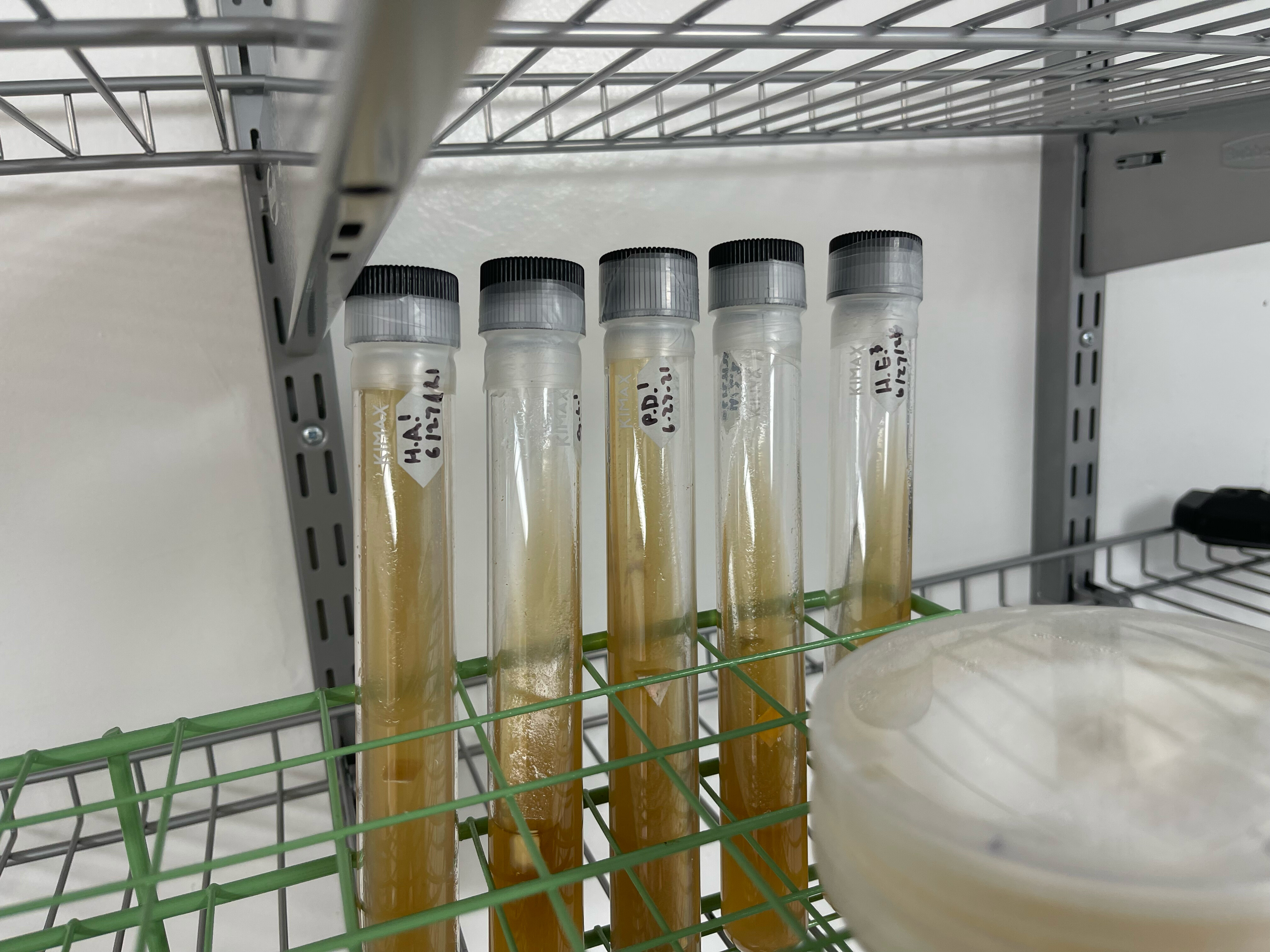
On the afternoon of 27 June 2021, glass culture tubes were photographed at Southwest Mushrooms: first a row lying in front of a laboratory filter, then, about forty minutes later, a row standing in a wire rack. In the rack photographs each tube carries a small handwritten label with a short code and the date. The photographs do not establish whether the two rows are the same tubes.
When I look at these labels, I see both their value and their limits. A code and a date are a beginning. What that date marks is not written on the label. Where did the culture come from? Which plate was its source? What is it being kept for? A useful record gives those questions somewhere to go.
Labeled culture tubes in a wire rack, photographed later the same afternoon.
Maintaining the culture and spawn library was recurring work, tied to what production needed. In my January 2021 lab video, I talked about keeping up with that work. The collection was not separate from the crop. It was part of preparing for the next one, before there was anything to harvest.
I find the library comparison useful because a book count does not describe everything in a library. I want to know what is there, where it came from, which copies can leave and which are kept back. A culture collection is not one number.
A culture collection is not one number.
Field Notes 002 · Before the First Transfer3 / 12
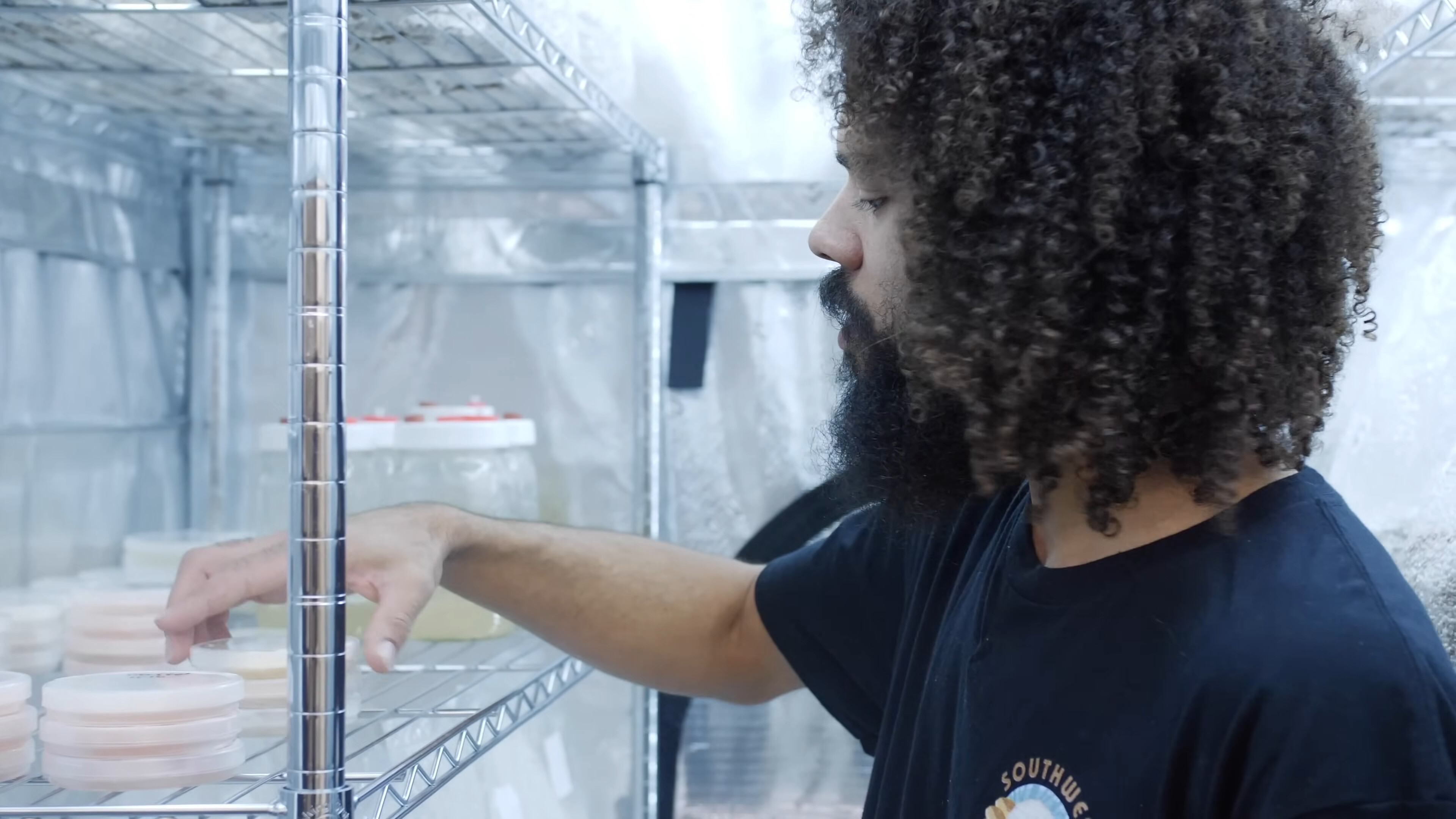
Michael Crowe in the culture room. Frame from a video published in June 2020.
02One name is not enough
In my August 2021 lab tour, I talked about labeling before starting work. A mistake might not become apparent until weeks later, when the culture turns out not to be the one intended. The information needs to travel with the vessel from the beginning, rather than depend on someone remembering what happened at the bench.
The delay is what makes that question important to me. By the time a labeling problem becomes apparent, materials, time and space may already have gone into the work. I want the record to connect the intended culture with the decision being made, not merely give the container a name.
In the culture room in 2020, I labeled the backs of plates with the species or strain lineage and kept more than one plate for a strain. A name helped me find the culture. Keeping separate plates gave me more than one vessel to account for, even when their labels referred to the same strain.
I use a label as shorthand, not as the whole story. A code on a tube, a name spoken at the bench and a line in a record can refer to the same culture, but that relationship needs to be established. Only the record can say they mean the same culture.
Field Notes 002 · Before the First Transfer4 / 12
One name is not enough, continued
In the shiitake work I discussed in August 2020, starting cultures from spores was different from keeping an established clone. New growth brought a selection question: which cultures would grow well and produce the qualities I was looking for? The species name alone could not tell me how each new culture would perform.
A culture grown from spores is a new identity, even if it carries the species name of the one before it.
The collection had more than one kind of origin. Cultures came from other growers and culture libraries, and one Arizona strain traced back to a grower who collected it in the wild. Those beginnings mattered. A familiar name could help me recognize a culture, but it did not replace the history of where that culture came from.
I want a source entry to tell me where a culture began. Different sources answer different questions, and each deserves its own line rather than being absorbed into a familiar name.
Plate 01 · What a record line can hold
Layer
What it holds
The question it answers
Identity
documented source or strain name
What is this culture supposed to be?
Event
the transfer that made this vessel, and its date
How did this vessel come to exist?
Object
this tube, plate or jar
Which container is this?
Purpose
reserve, working, check
What is it for?
Decision
available, held, committed, discarded
Can it be used now?
Plate 01. An illustrative template, not a Southwest Mushrooms record.
These are proposed recordkeeping layers, not a laboratory standard and not a description of any Southwest Mushrooms record. Source labels are not authentication.
Only the record can say they mean the same culture.
Field Notes 002 · Before the First Transfer5 / 12
Comparing two plates at the bench, from a video published in June 2020.
03What I look at, and what looking cannot tell me
At the bench in June 2020, I compared plates, selected one by how far it had grown and kept others in reserve. Choosing a plate did not make the remaining plates disappear from the collection. They still had a role. That distinction matters: the plate in use and the plates kept back belong in the same picture.
There are three things I want a record to keep apart: the plates made, the plate chosen and the reason for choosing it, and the plates retained. Recording only the chosen plate would leave the reserve material out of the picture. The decision is easier to understand when the alternatives remain visible.
Field Notes 002 · Before the First Transfer6 / 12
What I look at, continued
When I discussed liquid culture in 2021, I talked about clarity and about the limits of judging what was in a jar. I also pointed beginners toward agar, where growth could be observed on a surface. What I could see was useful, but it was not the same as knowing everything about the culture.
The pink oyster strain I discussed in 2020 needed a different approach from cultures I kept cold. I maintained it through repeated transfers. The important distinction here is not a calendar interval to copy. It is that different cultures in the same collection did not necessarily fit the same routine.
That was one strain in one Phoenix lab, not a schedule for every collection. A useful record makes those differences visible. What is being retained, what is being worked with and what needs attention next are separate questions, even when the vessels share a shelf.
The label and the record say what a culture is supposed to be. The plate shows how it is behaving.
Field Notes 002 · Before the First Transfer7 / 12
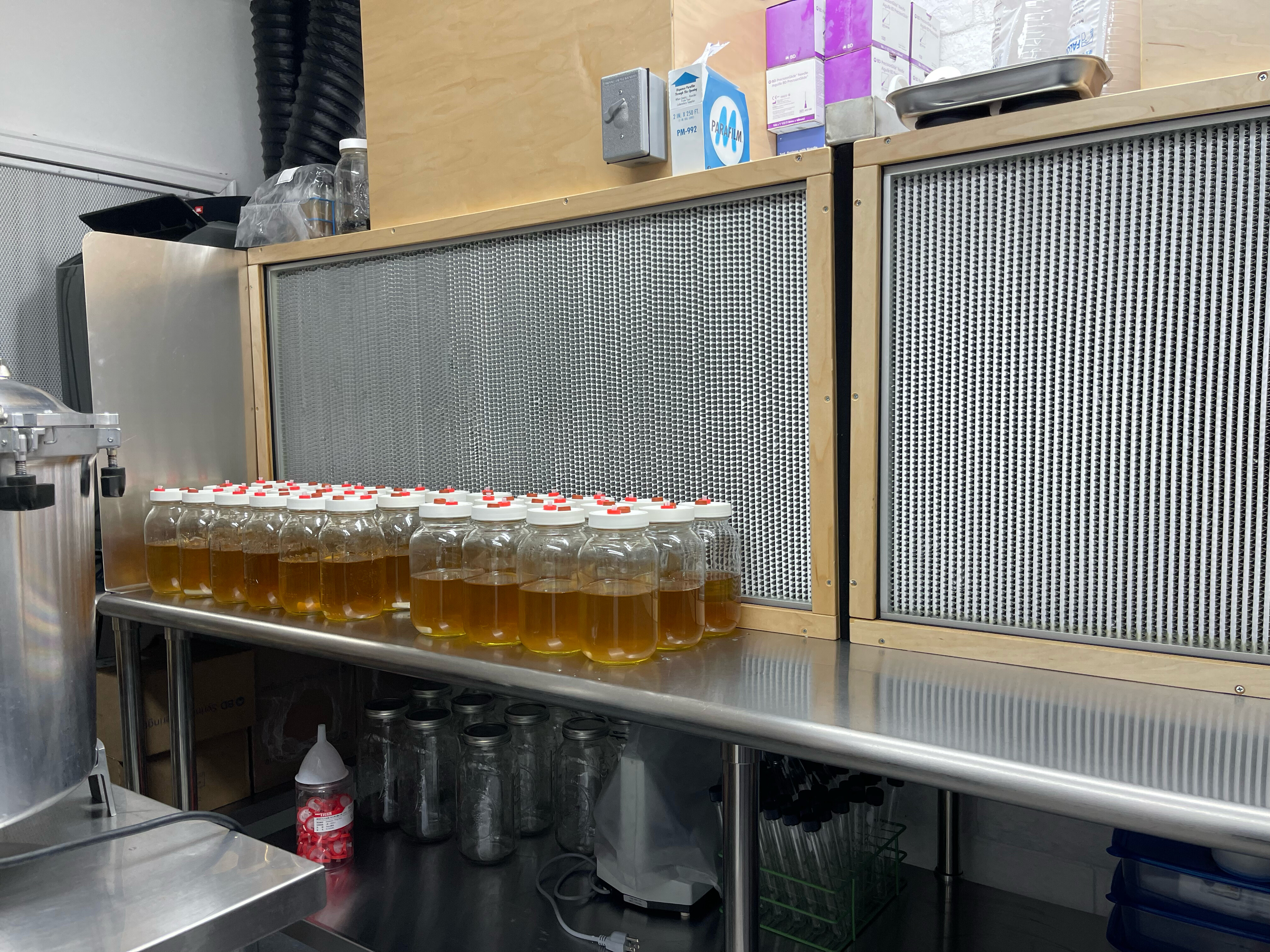
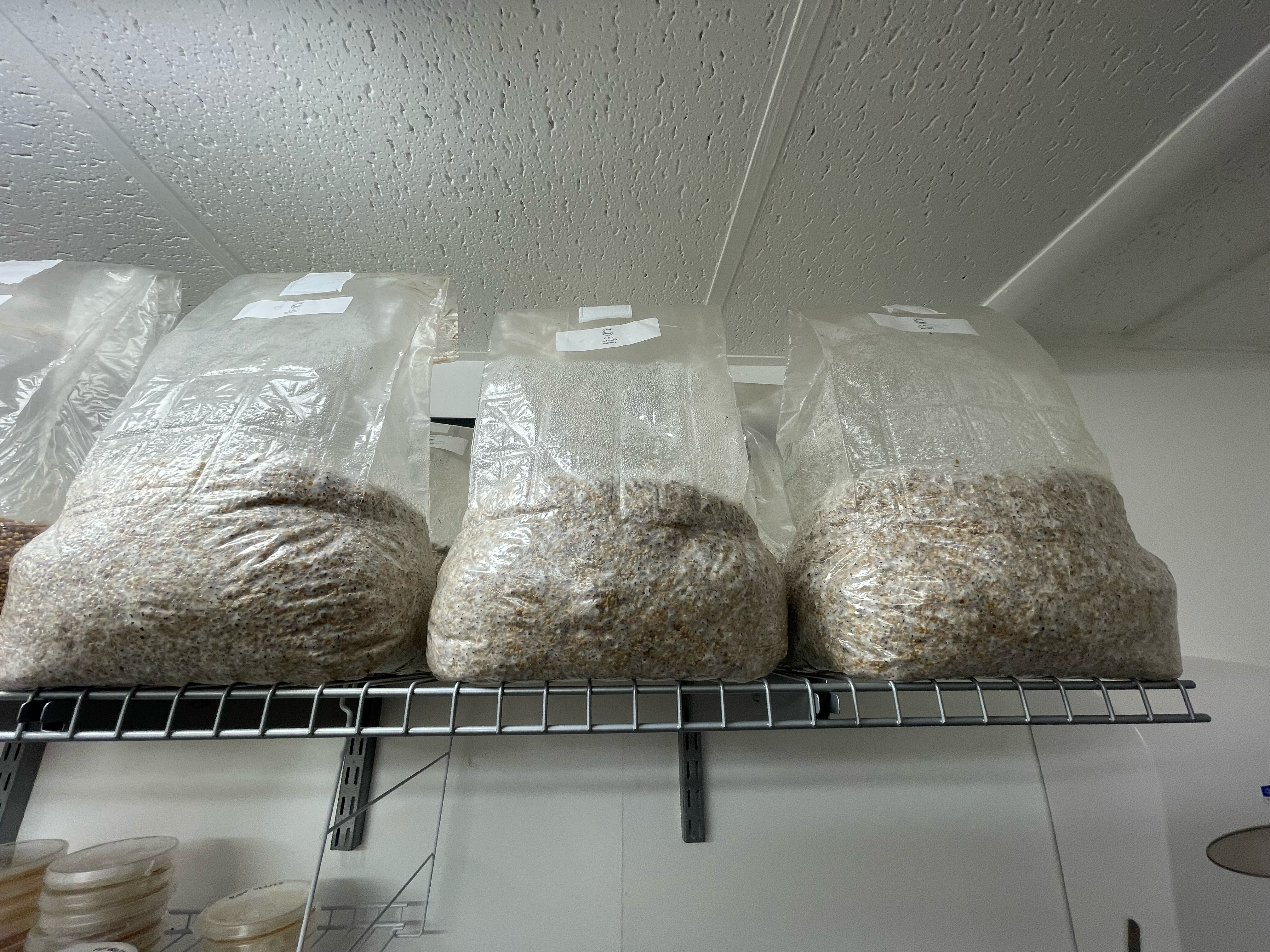
Liquid culture jars (October 2023) and colonizing spawn bags (May 2023). Photographed on different dates; they do not show one batch or one culture.
04From culture to crop
Generation labels also need context. In the 2021 grain-work recording, I used G1 and G2 for stages of expansion. In the 2020 shiitake recording, G2 appeared on a block in a different context. Reading the mark without knowing the process behind it would leave part of the history unexplained.
The same short mark can serve different purposes in different contexts. That is why I want a generation entry to state what it counts from, rather than expecting two characters to explain the whole history. The label becomes more useful when it points back to a defined step.
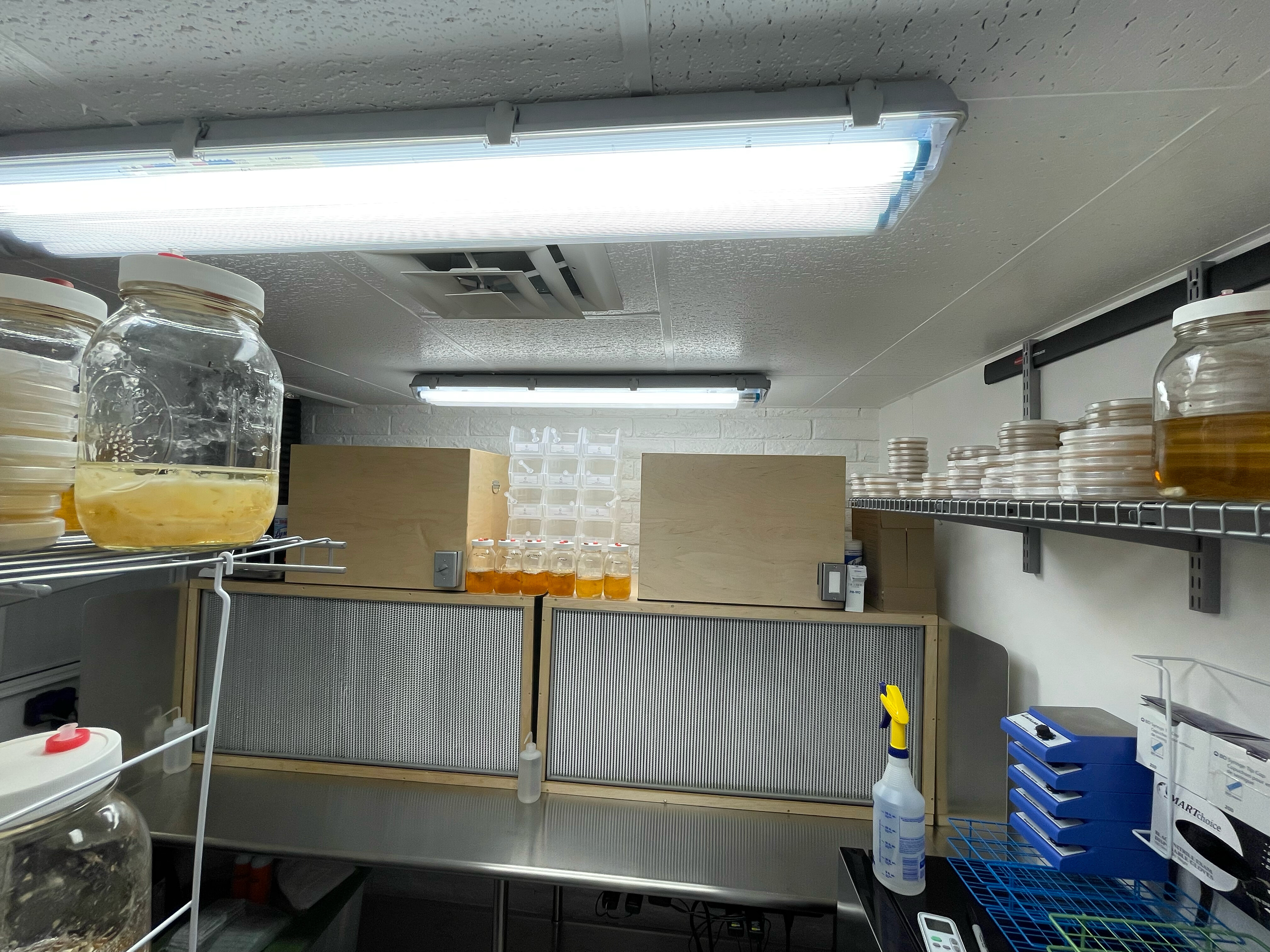
The Southwest Mushrooms clean room in 2023. Archival photograph; it does not describe the current collection.
The record did not stop at the lab door. Harvest labels connected a strain with a harvest date. A new pioppino culture entering the grow room raised another question: how would it produce? The later crop mattered because a culture was being kept for a purpose, not simply to occupy a vessel.
Plate 03 · Recorded lineage (illustrative)
PlatePL-Asource, date
→
Grain bagG1-Aparent plate, date
→
Grain bagsG2-A01 to A10parent bag, count
→
BlockB-A01parent bags, date
→
HarvestH-A01parent block, date
Plate 03. Illustrative lineage with invented identifiers, not a Southwest Mushrooms record. Each arrow means a recorded relationship, not a biological test.
Field Notes 002 · Before the First Transfer8 / 12
Poured plates by the filter, June 2021.Making several plates per strain was routine.
05What is actually available
In February 2021, I described turning stored cultures into a liquid reserve. The backup covered most of the strains we grew, not all of them. That difference is small in a sentence and important in a collection. A backup count and a count of everything being grown were not the same number.
That distinction is the heart of the issue for me. What a farm grows, what it has backed up and what it could start next are different questions. I want the records to make those differences visible rather than hiding them inside a single total.
In the 2022 recording, a couple of fallen plates were set aside and spares took their place. That was a decision about what to use, not a diagnosis made from a photograph. The spare plates mattered because there was something to return to when the original plan changed.
What interests me is that a decision can change the available count even when the physical containers have not disappeared. A shelf count alone cannot explain that change.
Field Notes 002 · Before the First Transfer9 / 12
What is actually available, continued
06The collection is a record of decisions
Labeling, selection, reserves and renewal belong together. Choosing a plate is one decision; keeping another is a second. Backing up most of a collection is not backing up all of it. Each distinction changes what a grower can say about the material on the shelf and the work it can support.
The label is the beginning of the record, not the end of it. For any vessel in a collection, I want to ask where it came from, what it is for and what supports the decision to use it. The count becomes useful when I understand what is being counted.
The label is the beginning of the record, not the end of it.
Field Notes 002 · Before the First Transfer10 / 12
Sources, archival context and image credits
Historical passages draw on Southwest Mushrooms recordings published between June 2020 and June 2025. Each passage drawn from a recording was checked against a fresh transcription of the original audio.
Dates given for videos are publication dates; recording dates may be earlier, and one facility tour published in 2025 has no known recording date. Photographs are Southwest Mushrooms iPhone images whose file metadata dates them June 2021 to October 2023. Video frames are from the 2160p stream of the June 2020 video “Mushroom Mycelium Tissue Culturing in Liquid and Agar Media”; the camera-original resolution is not known. No image is generated or composited. Files were converted to sRGB JPEG, oriented and cropped; there is no tone adjustment, retouching or alteration of labels. The images come from different dates and do not show a single batch or culture. Plates 01 to 03 are editorial diagrams with invented values. Culture-collection guidance is from ATCC’s mycology guide. This feature describes past practice, not the current state of any Southwest Mushrooms collection.
Images: Southwest Mushrooms archive, used with the rights holder’s approval. Individual photographers are not recorded.
Archival chronology
Date
Type
Source
Used in
2020-06-07
video published
ar_AuA2twiY
Sections 2, 3; frames F01 to F03
2020-06-12
video published
-Fl3R3zzIfA
Section 4
2020-08-10
video published
btXfkWYlXEI
Section 2
2021-01-15
video published
Ng_Wq9PnEVI
Section 4
2021-01-22
video published
rxlJJpu3O_g
Section 1
2021-01-29
video published
AsRW9LKwzYM
Section 4
2021-02-12
video published
W86NQf2ir7A
Section 5
2021-06-25
photo metadata
P05 (poured plates)
Section 5
2021-06-27
photo metadata
P01, P03 (culture tubes)
Opening, section 1
Date
Type
Source
Used in
2021-08-21
photo metadata
P07 (plates in hand)
Cover
2021-08-30
video published
C-i0F6wGa5Q
Sections 2, 3
2021-10-26
video published
73IBym7XHSw
Section 4
2022-07-31
video published
5Xr947EFvjE
Section 5
2023-04-18
photo metadata
P13 (clean room)
Section 4
2023-05-10
photo metadata
P14 (spawn bags)
Section 4
2023-10-24
photo metadata
P16 (liquid culture jars)
Section 4
2025-06-25
video published; recording date unknown
mNnTXNS76Dw
Section 2
Publication dates are upload dates; recording dates are unknown and may be earlier. Photo dates are from file metadata (MST).
Image credits
Cover P07, iPhone still, 21 Aug 2021; Page 2 P01, iPhone still, 27 Jun 2021; Page 3 P03, iPhone still, 27 Jun 2021; Page 4 F01, video frame, ar_AuA2twiY 00:01:04; Page 6 F02, video frame, ar_AuA2twiY 00:18:26; Page 7 F03, video frame, ar_AuA2twiY 00:14:40; Page 8 P16, P14, iPhone stills, Oct and May 2023; Page 8 P13, iPhone still, 18 Apr 2023; Page 9 P05, iPhone still, 25 Jun 2021. All photographs and footage: Southwest Mushrooms archive, used with the confirmation recorded for this issue.
Field Notes 002 · Before the First Transfer11 / 12
Continue your learning
If you want to go further, I have brought together three collections of Southwest Mushrooms written materials. Choose the books and supporting guides, the eight species SOPs with the Commercial SOP Playbook, or the eight-species SOP collection on its own. Each collection has a different scope; the comparison below shows what belongs in each.
$499
Ultimate Mushroom Grower Bundle
25 files, including both volumes of The Mushroom Grower in PDF and EPUB, the audio editions, the Lion's Mane SOP, the Commercial SOP Playbook and supporting guides.
Not listed as containing the complete eight-species SOP collection.
Payment by card through Stripe. Sold by Crowe Logic, Inc., Michael Crowe’s company. Files download the moment payment clears, and again from your receipt.
Field Notes, Issue 002. Before the First Transfer. From the Southwest Mushrooms archive. By Michael Crowe, developed with the Field Notes editorial team.